8. Ryan Herd

Dr. Debi Lynes interviews Ryan Herd of Caregiver Smart Solutions about using sensors for any stage in life on Aging in Place Podcast

(duration: 33 minutes)

Ryan Herd


Subscribe

Apple Podcasts | CastBox | Google Podcasts | Pocket Casts | RadioPublic | Spotify | Stitcher | TuneIn

Follow

Facebookhttps://www.facebook.com/aginginplacepodcastcom/

Instagramhttps://www.instagram.com/aginginplacepodcastcom/

Twitterhttps://twitter.com/aging_podcast

Resources

Disclosure: Links below to other sites may be affiliate links that generate us a small commission at no extra cost to you.

Caregiver Smart Solutions

CES Showstopper award winner

Plastic shot cups

Takeaways

It’s all about sensors.

Sponsors

Lynes on Design

Transcript

Debi Lynes:                   00:03                Hi and welcome to aging in place for every stage in life. What if you could visit or have a home that would accommodate anyone at any age, any physical ability at any time? How cool would that be? That’s what we’re doing here at aging in place. Why me? Because I’m a doctor of psychology and I specialize in physical spaces in Health and wellness. Also, I love designing with intent at any age. Why now? Because we the baby boomers want to age in place gracefully and we want our families around us as much as we can. And why you the audience? Because we want you to experience what it’s like to have a home that’s safe, aesthetically pleasing, and that you can live in at any age with any ability at any time. I’d like to introduce you now to Aging in Place Podcast for every stage in life.

Debi Lynes:                  01:03                Hi, I’m Dr. Debi Lynes and welcome to the Aging in Place Podcast. I am here today with Ryan Herd and I’m very excited to have you today straight from the CES conference in Las Vegas. Ryan, I’m thrilled to be able to talk with you and I’d like to learn a little bit about your background, number one, number two about the CES conference and number three, I think it congratulations are in order.

Ryan Herd:                    01:31                Hey Dr. Debi. Well, thank you for having us on. I really appreciate it. So, let’s start by unpacking those questions. Who am I? I’m actually Ryan Herd. I’m known as the smart guy. I’ve been in smart tech and IOT for 29 years. I literally wrote the book on it called Join the Smart Home Revolution and I’ve been in the tech industry for all my life. I’m a techie. I kind of love this stuff.

Debi Lynes:                   01:57                Did you get into that? How did you get into that area of being known as? I like it. I’m known as the smart guy.

Ryan Herd:                    02:03                Yeah, Ryan Herd the smart guy because I wrote the book. So I wrote the book called Join the Smart Home Revolution and it was really to fix or answer that fundamental question, which is what is smart home and how can it help me as a human? You know, the one issue with the technology industry is where you make a lot of widgets and gadgets, but how can I actually help me as a human? So I started to answer that question and because of that I’ve also worked with some of the top companies like Sony and really group would just call a banker and home advisor. I helped them start up their smart home division. So yeah. And I also had a integration firm called the one sound choice. And what we did is smart technology for high net worth, high profile individuals all over the US.

Debi Lynes:                   02:50                And you know, I want to get right into it. I still want to go back and talk a little bit about your kids and your life because it’s pretty fascinating. You have, it sounds like you have a nice self-care and a nice balanced life. But to get right to the point, one of the things that intrigued me when I first talked to you, and because I’m older and I’m very, yeah, there you go. A grandmother of nine and most 10. I’m really curious when it comes to aging in place and the home. The more research I do and the more data I have gathered, the more I realize that a lot of the products that are for aging adults if you will, or people who have special needs acute illnesses aren’t really user-friendly. And it was so fun for me to talk to you because that was the first thing out of your mouth is oftentimes people who manufacturer these things don’t really think in terms of universal designer humans.

Ryan Herd:                    03:47                That’s the big problem. And, and I don’t mean to beat up on anybody. Again, I’m a techie. I love technology. I just got back from CES and that’s the Superbowl of technology. Now with that said, I’ve been spending a lot of time out in Silicon Valley as well as over here in New York and NGIT and there’s a lot of really smart people. I mean they are doing amazing things and they’re building and designing things that are going to be incredible for when I get older. Where they lack is they don’t understand the consumer or the person that’s going to use it. Today. For example, when we’re talking about let’s say the greatest generation people that are approaching a hundred years old, you know, 19, 28 and older is when they were born. You know, they’re technologically adverse. It’s all about, they don’t want to be spied on. It’s their belief system is, you know, we are going to meet somebody, we’re going to get married, we’re going to buy a house, we’re going to have kids. We’re going to live in that house. We’re going to die in that house. And we’re never ever, ever going to be a burden to anybody else. So that’s what we do see, is there’s people that are trying to just take all these smart home gadgets and put it in mom’s house, but mom doesn’t need a smart lock. She doesn’t need a smart thermostat. She doesn’t need a alarm. What she needs is to know that somebody’s got their back.

Debi Lynes:                   05:05                And you know that. It’s really funny because my mom and dad moved in three years ago. We lost my mom, but my dad’s 91 92 and it’s exactly what you say is true. They want their life to be the same as it always has been, but they have so many more restrictions now. And I also think for my dad, at least, he doesn’t want to feel special. He doesn’t want to feel like he’s a burden on anyone.

Ryan Herd:                    05:31                Right, right.

Debi Lynes:                   05:31                He wants to be as independent as he can. So what does that mean in terms of technology?

Ryan Herd:                    05:40                Well, independence, you said it right. So let’s think about it. Remember when you got your first car and you were independent for the first time you left home, this was the first time you’re able to be on your own. Nobody was next to you. You know, we’ve been craving it. We finally got it. Now you’re not going to give that up, right? You want your independence for as long as possible. And that’s why what we’ve seen is those that are 65 and older, more than 85% of them want to live at home alone and independent. So the question is how do we as caregivers, how do we enable that? How do we give them the ability to be independent, live at home, and yet reduce our stress. Because being a caregiver, it’s, it’s stressful, it’s time-consuming and it’s isolating.

Debi Lynes:                   06:24                Yes it is.

Ryan Herd:                    06:26                So we’ve done, the new company I have called Caregiver Smart Solutions is just that. We’re answering that fundamental question, which is how are they doing, right? We’re enabling your loved one to live home longer while reducing your stress because as I said before, being a caregiver, it’s stressful, time-consuming and isolating. So let me tell you what we’re not, we’re not a camera, right?

Debi Lynes:                   06:49                Okay.

Ryan Herd:                    06:49                Because cameras are invasive. You don’t want a camera in your home. I don’t want it in my home.

Debi Lynes:                   06:53                My dad, Well what’s funny about that is my dad has flat out refused it, don’t be spying on me. not spying. I just want to make sure if you’re falling or you’re slipped or you can’t do this or that, that you’re covered.

Ryan Herd:                    07:04                Exactly. That’s actually the first thing I did when my father had cancer. I put a camera in and he put a dish towel right over it. So that wasn’t gonna work. So the second thing that we’re not, we’re not trying to change your loved one’s habit. I dunno. Have you ever tried to change the habit of an 80-year-old?

Debi Lynes:                   07:21                Yeah it’s not pretty.

Ryan Herd:                    07:23                I can’t even change my own habits, right? So that’s not going to happen. Number three, we’re not aware of it because the reality is, is they’re not wearing them. They’re not charging them up. And you have to understand, as I said before, there’s a psychological aspect. And what I mean by that is it’s like me going to my father Dad, do me a favor. I need you to wear this. And if something happens, you gotta push the button. Now here’s where psychology comes in. The reality is, is I’m working around, I’m dealing with my kids. I’m dealing with this. A video call. I have other meetings I have to take. I’m not thinking about end of life. 93-year-old grandma. You know what she is and now we’re taking this device and saying, if you have a problem, push the button. And she’s looking at that as the button of death. And you have to understand they don’t want that and we want to enable them, but we don’t want to bring that kind of stuff up. So how can we be proactive? And this is what we are caregiver’s smart solutions. We take tiny non-evasive sensors and we place them discretely around the home and what the sensors are monitoring is your loved ones’ habit because your habit is an indicator of your health. For example, if mom’s habit is that she gets up twice a night to go to the bathroom fine green check Mark. That’s what she always does. But if all of a sudden she starts getting up five times a night, three nights in a row, that’s definitely an issue. That’s something you want to know. And it could be a urinary tract infection. No, that’s just a little bit of what we do and we do so much more.

Debi Lynes:                   08:56                Talk to me a little bit about a, what is sensor? How does the sensor work? It Does it go in the corner of the room? Does it go in different rooms? What am I actually monitoring movement sound?

Ryan Herd:                    09:06                So there’s a couple of things that our sensors are doing in the baseline. We’re measuring movement, we’re measuring things like the refrigerator, we’re measuring the medicine cabinet, we’re measuring the time it takes mom to walk down the stairs. We’re measuring quality. How long has mom been sleeping? It’s really important to get, let’s say five to eight hours of sleep.

Debi Lynes:                   09:27                Correct.

Ryan Herd:                    09:27                She’s getting up once an hour, every single hour. That could be an issue now.

Debi Lynes:                   09:32                Was an issue for cognitive decline.

Ryan Herd:                    09:33                It’s an issue for that. And, and you know what? We’re facilitating the insights through the use of an app. You can see exactly what’s going on. And let’s say it’s that. And you see mom, your loved one got up once an hour for four hours straight. So now when you talk to mom, you can say, Hey, how’s everything doing? And what is she going to say? It’s fine. But now you can say, I saw that you were up a lot last night and it, you know, it might’ve just been a bad burrito. I don’t know.

Debi Lynes:                   10:01                How does it, how does it actually track? We’ve got about a minute in this segment. So how does it actually document and track? Is it actually formulating data? Is it a, is it journaling for me? Is it sending me a note or an email?

Ryan Herd:                    10:18                So what we’re doing from the fancy side is we’ve got a bunch of noninvasive sensors mounted throughout the house and what happens is we’re using something called machine learning. Think of that as a record button, so two to three we’re recording the habits, so now we have a baseline, we know how your loved one is doing, and then from there we add something called AI fancy technology and what AI is looking for is they’re looking for those things that are out of the ordinary. For example, if mom’s sleeping later or if mom is taking longer to get down the stairs or if mom is not drinking, making her coffee. All of these things are outside of what normal is.

Debi Lynes:                   11:00                All right, hold that thought. We’re going to take a quick, quick, quick break and I’m going to come right back and get into it again. We’re talking with Ryan Herd and I’m really excited. We’re talking about motion sensors. Stay with us. We’ll be right back.

Henrik de Gyor:             11:12                For more podcasts, episodes, links, information and media inquiries. Please visit our website at aginginplacepodcast.com as we transitioned through life with the comfort and ease you deserve, discover how you can create a home that will adapt to you as you journey through life and the changes it will bring. Please follow us on Facebook, Twitter, and Instagram as our host Debi Lynes and her expert guests discuss relevant topics to creating a home for all decades in life. Don’t miss our weekly episodes of aging in place. Podcast for every stage in life.

Debi Lynes:                   11:49                We are back here on aging and place. We’re talking with Ryan Herd, talking about motion sensors. More importantly, we’re talking about universal design. We’re talking about aging in place for absolutely every stage in life and I’ll tell you what’s interesting about this is although we’re talking about older adults at this point in time, one of the reasons I wanted to do the podcast, Ryan, is because it’s really something that’s important for families or folks at any age. I know my daughter has two young kids. And when I think about her having motion detectors, I think, or the sensors as you’re talking about, I think it would be an amazing opportunity.

Ryan Herd:                    12:29                And it’s interesting because as your daughter is right, so I’m 48, I’ve got three young boys and your daughter has, and they call us the sandwich generation, meaning, you know, we have our kids that we’re taking care of as well as we have our aging adults that were also worried and concerned about. So we’re sandwich tray in the middle of that.

Debi Lynes:                   12:47                It’s so very true. Being a psychologist, I do a lot with the sandwich generation. I started out with adolescent and now I’ve ended up with the geriatrics and I think we’re sitting right in the middle of them. So let’s go back and talk about these sensors and as far as the artificial intelligence piece of that, how this works again.

Ryan Herd:                    13:06                So the easiest way to explain it is, as I said, so we have two main things that go on. We’re using machine learning and again, think of that as the record button. So that’s going to record the habits over about two weeks’ time. And then we’re going to get a baseline. So for example, we’ll be able to know that mom is vacuuming every Wednesday because everyone says she’s going in and out of the rooms and we can see them [with sensors, not cameras]. Once we get that baseline, then we can add AI or artificial intelligence on top of that. So for example, let’s say, let’s say we’re talking about false. So envision a Cape Cod. So you have a two-floor house, a mom’s upstairs, she gets up in the morning, she goes to the bathroom. Now these are going to be triggering our sensors and she comes out of the bathroom, she goes walking down the hallway, triggers a sensor on the top of the hallway. We know that she takes about three and a half minutes to walk down the stairs. She’s going to trigger the sensor at the bottom of the stairs. Then she’s going to walk into the living room because that’s the next room. And then it goes into, she’s going to trigger that. Now it’s going to know what her typical timeframe is. How long it takes to get down those stairs. Now another scenario, let’s say she got up, she went to the bathroom, she got to the top of the stairs and now all of a sudden it’s four minutes, four and a half minutes, five minutes. And she hasn’t triggered this. The sensor on the bottom of the stairs where his mom, she’s probably laying in the middle of the stairs.

Debi Lynes:                   14:35                Or just we going to say she’s gotten dizzy. She’s fallen. Yes.

Ryan Herd:                    14:38                You take another scenario, she triggers a sensor at the top of the stairs but then triggers a sensor at the bottom of the stairs 30 seconds later and does not trigger the next sensor, which is living room. What happened? Mom probably rolled down the stairs. That’s the kind of power that we’re talking about [awareness] and that’s just on one thing. So let’s take it even farther. Let’s talk about dehydration. So technically the closed loop would be things like, I see mom open up the refrigerator. I see mom moving around. I see mom making coffee through the coffee pot and I see mom going to the bathroom [all with sensors, not cameras]. Well, that’s what you expect to happen.

Debi Lynes:                   15:13                Correct.

Ryan Herd:                    15:13                I’m going into the fridge, walking around, not going to the bathroom and not making coffee. That could because for concern over several days because that could mean that she’s dehydrated. Dehydration that precursor to a fall. And guess what? We don’t want our aging loved ones to fall. That’s the power of what we’re doing.

Debi Lynes:                   15:35                So how does this work from a practical point of view? Are you in the actual production? How does someone get this? What would be a fee schedule? It just makes so much sense.

Ryan Herd:                    15:49                So we have three different kits. I don’t know if you can see it.   

Debi Lynes:                   15:54                There you go.

Ryan Herd:                    15:54                At Caregiver Smart Solutions, what we do to make it easy for everybody is we made three different kits. We have the Basic kit, Deluxe kit, and Deluxe plus. Obviously, they can be found on our website which is caregiversmartsolutions.com. You can give us a call at (888) 585-5022. Now the easiest way to explain it is think of the basic kit. The scenario is we just got out of holiday, right? We had Thanksgiving, we had new year’s. So let’s say you saw grandma and this was the first time that you realize that grandma, you know she, she’s just not as snappy as she used to be and I’m not saying anything’s wrong with her, I’m just saying that.

Debi Lynes:                   16:34                No, no, no okay.

Ryan Herd:                    16:34                The first time that your concern you get the basic kit. All I want to know is the basics. Is she moving around? Is she eating, is she taking her meds and is she going to the bathroom? Just the basics. From there, we can go all the way to the deluxe plus kit, which then we’re monitoring obviously much more, many more things like doors. We’re also monitoring things like TV because if mom’s sitting in front of the TV for five and six hours, that’s like me saying, I need you to get up and run around the block. They shouldn’t be sedentary for that long. The coffee pot or tea kettle, we’re measuring sleep quality as well as fall detection, so on that, that is usually for somebody that maybe there’s been an event, maybe mom has already fallen or maybe you’re really concerned about your loved one. Maybe she’s got a bit of dementia.

Debi Lynes:                   17:28                Dementia.

Ryan Herd:                    17:28                What’s the most important thing when we’re talking about dementia? We’re talking about a did the door open up and b that you walk out of that door because that is the most important thing. Those are the kind of things you want to know.

Debi Lynes:                   17:43                Well, it’s really interesting to me because as a certified aging in place specialist of the things I think about all the time are when cost is no object. That’s one thing. Okay, I can hire full-time help, I can do this, I can do that. But I think for many of us within the sandwich generation, we don’t necessarily near-live near our loved ones. And I think that, you know, if there have been such a void in American for any kind of, I guess fixed in the middle, if you will.

Ryan Herd:                    18:14                Right.

Debi Lynes:                   18:14                And, and more importantly home-health and some of those things are almost cost-prohibitive. How do you all play with others in this area, if you will?

Ryan Herd:                    18:31                So think of us as a, we’re complimentary and we’re proactive. So every, all the technology in the market right now is reactive. It’s, I’ve fallen, I can’t get up. If something happens, push a button and we’re all waiting for impending doom.

Debi Lynes:                   18:44                Correct.

Ryan Herd:                    18:44                How about earlier? So we can start answering that question. As I said before, how are they doing now when we’re talking about in-home care, the least expensive that you can get into it for is twice a week, four hours a day, and that’s only covering eight hours at 25 bucks an hour. And that’s about $10,400 a year. It’s a lot of money. Now the problem is is there’s 168 hours in a week. So what happens that on 160 hours, what would the system like ours? You’re still getting all of the basic questions that you have answered and it could be as simple as how many times is mom going to the bathroom? How many times is she opening up the medicine cabinet at the refrigerator? Is she moving around? Those kinds of things. We’re also complimentary regardless of where mom is living. And what I mean by that is maybe it’s a house, maybe it’s a townhouse, a condo, maybe she’s in independent living, maybe she’s in assisted living because you have to remember in assisted living, if we have the opportunity to put our loved ones in an assisted living place and that’s a beautiful place, but their business model is that they are really an apartment building with a social aspect, right? They do have nurses on staff, but the responsibility is not to come in and check on mom all the time. Once mom goes into her apartment, once that door is closed, there’s now a black hole. So we facilitate you knowing how mom’s doing as well as the nurses’ aid station to know what’s going on.

Debi Lynes:                   20:15                One of the things that’s interesting psychologically is I know from my dad at least and for a lot of folks that I know and who have expressed concern with home health or bringing people in is they don’t want strangers in their home. I think, you know, for me it’s 60, I could care less bring him in. You know, somebody is helping me, I’m all over it. But I, but I understand that that’s a huge issue. And so this alleviates all of that. And I think the feeling of independence and autonomy is amazing. Do these run 24 hours?

Ryan Herd:                    20:48                They run 24 three 65 so 24 hours a day, seven days a week, 365 days a year. They’re always on. You can take a look at the app and see exactly how mom’s doing and if something’s a miss, you will know. So if something bad happens, we’re going to send that notification to you. So this way you can call up mom or we’re just going to facilitate that conversation. So here’s another scenario. Let’s say you have an in homemade, let’s call her. Sally is going over to mom’s house and then all of a sudden Sally calls you and says, you know what? I think we need more time in the house because I don’t think mom is eating as much cause she looks like she’s losing weight.

Debi Lynes:                   21:25                Got it.

Ryan Herd:                    21:25                Now you can live well back to our system and see exactly over time, what’s her average, how many times does she open up that refrigerator and if you see it trending down now you know that Sally is, you know, she’s honest. She’s telling the truth. I trust her. She’s absolutely correct. So it’s backing up with the in-home.

Debi Lynes:                   21:42                Well, it’s a check and balance. It makes so much sense. Ryan, we’re going to take another quick break and come right back. Once again, we’re talking to Ryan Herd. We’re talking about Caregiver Smart Solutions because he’s the smart guy, so stay with us. We’ll be right back.

Debi Lynes:                   21:57                Hi, I’m Dr. Debi Lynes design elements are psychologically and physically supportive and conducive to health and wellness. To learn more about what Lynes on Design can do for you for more information on certified aging in place, and facilitative and supportive design, look for lynesondesign.com. That’s L-Y-N-E-S on design dot com.

Debi Lynes:                   22:23                We are back here on aging in place. Once again, we’re with Ryan Herd and we’re talking about Caregiver Smart Solutions, and they are smart. Okay. The natural segue and the natural question is this, how in the world and why in the world, even though I know you’re the smart guy and you’re a techie, I mean, I think this whole demographic and this aging in place phenomenon, I can say this the baby boomers are aging. We’ve got a great transfer of wealth. We’ve got a lot of folks and you and I and me more than you are in this sandwich generation. Can you share a little bit about how you did get into it and then let’s talk about the CES Las Vegas conference and you winning.

Ryan Herd:                    23:07                Sure. So my background, as I said before, I’m known as Ryan Herd the smart guy and I’d been in technology for 29 years and I literally wrote the book on smart technology called Join the Smart Home Revolution. So everything is great. And then my father got cancer not once, but twice now. He’s tough as nails, but being his caregiver, I’m concerned, you know, and this is the first time that I’m really concerned on how he’s doing. So being the smart guy, I figured I could find something, buy it, put it in and everything would be fine. And then I realized that in this industry, technology stopped in 1990 literally when we talk assisted living facilities, they still have pull strings and they think that’s so leveraging my background, a smart technology, I started to attack this problem and saying, you know, why can’t I look at an app? Why is it that it’s 2020 and I still need a call, a text, or to stop by to see how my loved one’s doing. There should be the ability to have an app that can answer my fun amount of questions, which is how are they doing? You know, are they moving around? Are they eating, are they sleeping? Are they sitting in front of the TV? And then, of course, there’s the fault. So.

Debi Lynes:                   24:16                Brilliant.

Ryan Herd:                    24:16                That’s how I got into it and I figured I can fix this problem.

Debi Lynes:                   24:20                So what happens now? You were the number one, you won the CES conference. Talk to us a little bit about how that happened after talking with you, it makes sense.

Ryan Herd:                    24:31                Exciting.

Debi Lynes:                   24:31                But what were some of the criteria that you think you more than check the boxes on that you really had?

Ryan Herd:                    24:36                So we entered what’s called the Showstoppers and we first were named prior of CES, we were named one of the top 10 hottest startup at CES.

Debi Lynes:                   24:49                Which is how I heard about you.

Ryan Herd:                    24:52                Oh really?

Debi Lynes:                   24:52                Yes! That’s how I heard about you. I was just doing a little research and I was like… him.

Ryan Herd:                    24:57                I got to talk to this one.

Debi Lynes:                   24:58                And you know.

Ryan Herd:                    24:58                And we went from there and then we had to give another pitch. All 10 companies do. And I got to tell you, there was some stiff competition. There was a great company that was bringing robots. There was another company that was talking about water usage. And it was actually fascinating where it would go on the head in the shower and literally when you turn on, the water would go on. But if it didn’t sense anybody underneath it, it would go on like 50%. And then when you were under it or going, it was amazing. Another company that was doing retrofittable smart dials for stove, you know how all of our stoves are dumb. Or you can put this smart knob on and then through an app you can tell if it’s on, if it’s off all these things. So I, while I had competition, but at the end of the day, as luck would have it, we did incredible and we ended up winning. So we are named the hottest startup at CES. And then on top of that, the next morning we found out that we’ve won Techlicious Top Pick at CES. So we won back to back number ones, which were absolutely fabulous. They really.

Debi Lynes:                   26:08                Alright, so here’s the real question now what?

Ryan Herd:                    26:12                Now what? Well, we are in the background talking with a lot of the nationwide retailers. We are also thinking about moving into other countries because what we found out, we really knew this, but.

Debi Lynes:                   26:26                It’s ubiquitous.

Ryan Herd:                    26:28                Yeah. You know, with a product like this, the reality is I don’t care. I don’t care what your race, religion, creed for you live. Everybody has somebody that they love and care about and they want to make sure that they’re okay. And we’re talking about the US we’ve, we’ve actually got about a hundred million people that are 65 and older and 10,000 people a day turn 65. Now when you look at worldwide population, Japan actually has the most amount of old people with the least amount of young people taking care of them. So that’s a huge problem in Japan. Yeah. So it is amazing. So you’re going to see some amazing things from us. You know, it’s our destiny to fix this problem and really I want to, I want to reduce as much stress as I can because I am going through this. I get it. I know what it’s like and we just want to help people out.

Debi Lynes:                   27:21                It’s a very practical approach. I think that’s what is intriguing to me is that you’ve really taken, again, the universal design principles of that is a pretty simple application when you think about it, but it really covers so many aspects of safety in the home. Are there specific places that you put these sensors?

Ryan Herd:                    27:47                So we do have videos that teach you how to do it and basically it’s…

Debi Lynes:                   27:50                Are there Youtube videos?

Ryan Herd:                    27:50                Of course, peel and stick them on the wall. You know, we want to respect our loved ones, architectural details, so we want it to be as non-intrusive as possible. With that said, don’t put it behind a door, behind a plant. We can help you with that.

Debi Lynes:                   28:09                Okay. You do that. I was going to say, how does one get this product or is it available and if not, when will it be available?

Ryan Herd:                    28:17                So this is our third generation product.

Debi Lynes:                   28:19                Oh, is it really.

Ryan Herd:                    28:19                It’s going to be coming out the second quarter of this year. It’s the most cost-effective. It’s the smallest. Again, these are tiny, non-intrusive sensors. They’re about the size of a quarter.

Debi Lynes:                   28:32                How do they mount?

Ryan Herd:                    28:34                Peel and stick, You literally peel the back and stick it on the wall. So it’s nice and simple. Now if it seems like it’s too complicated, we’re in the middle of forming a partnership with a nationwide installation company. So this way we’d be able to take care of you. So again, we have some amazing things coming out in the next quarter. So stay tuned.

Debi Lynes:                   28:54                Did you have any idea when you first started and went to school that this would be the direction that you would take when you were a kid? Now are your three boys pretty techie too?

Ryan Herd:                    29:05                They’re techie because dad’s a techie, but a funny story a side note is I come from a family of entrepreneurs. My mother is a entrepreneur, my uncles are entrepreneurs. And when I got out of high school, I actually went to culinary arts school. So I got a degree as a chef.

Debi Lynes:                   29:21                You’re a chef? Of course you are.

Ryan Herd:                    29:22                I left that and I started an electronics company in 1989 so that was…

Debi Lynes:                   29:29                Tell me about reinventing. Oh, I absolutely love this. There you go. Well, I tell you what. I’ve got a little homework to do now. I’m going to go read up a little bit more about the smart guy and I really appreciate you taking time today and is there anything that you can say is on the horizon, a little teaser that we could look forward to soon?

Ryan Herd:                    29:52                So for Caregiver Smart Solutions, we are trying to answer that fundamental question which is how are they doing. And at the end of the day it’s the little things that are important. Is the, is your loved one moving around? Is she opening up the fridge? Is she doing all those things as well as so much more now on the horizon you’re going to see some amazing stuff with us. We are going to be partnering with some of the best companies that are out there. You’re going to see us expand as far as the granularity and the more information that you can get because our goal is to really get into your loved one’s house as early as possible. So this way we can fix as many things as possible as they age and as they age. Really give them the ability and give you the ability to help them out and keep their independence for literally as long as we possibly can.

Debi Lynes:                   30:42                You are absolutely amazing. We want to thank you. We want to thank all of you for joining us. I’d like to introduce you to a friend of mine, Tracy. Tracy is naturally curious and always creative and when we were doing the Aging in Place Podcast, she said there are so many quick tips that I can think of offhand. My response, who knew she’s going to be with us every week, giving us a quick tip and to hint that is a practical application.

Tracy Snelling:              31:16                Thanks Debi. This shot is for you. I only take five pills a day, so I really don’t need a pillbox every morning. I place my five pills in three cute little shot glasses, one for morning, one for afternoon and one for bedtime. At a glance, I can see [via sensors] if I’ve taken my medications. Of course, keeping them out of the reach of little ones is safety, but since I live alone, I placed mine next to my coffee pot and as I do take my medications, I turn the shot glass upside down. The plastic shot cups makes it handy if you’re a caregiver to remember how the nurses pass medications out in the hospital. It makes it so much easier for the elderly to take their meds out of a cup. Then just placing them in their hands. Who knew those glasses have more than one use?

Debi Lynes:                   32:07                It’s pretty amazing to see the direction we’re going for aging in place. My takeaway for today is pretty simple. It’s all about sensors. Just remember that it’s all about sensors. Again, we want to thank all of you for joining us here on aging in place. Have a great week and thank you, Ryan Herd.

Henrik de Gyor:             32:31                Aging in Place Podcast is hosted by Debi Lynes and produced by Henrik de Gyor. If you have any comments or questions, send an email to debi@aginginplacepodcast.com. We would love to hear from you. If you’re interested in advertising or sponsoring this podcast, email us at PR@aginginplacepodcast.com. Thank you for listening to Aging in Place Podcast.

6. Missy Santorum and Parrish Neville

Dr. Debi Lynes interviews Missy Santorum and Parrish Neville of Palmetto Electric Cooperative about electrical service for any stage in life on the Aging in Place Podcast

(duration: 32 minutes 22 seconds)

Missy Santorum
Missy Santorum
Parrish Neville
Parrish Neville

Subscribe

Apple Podcasts | CastBoxGoogle Podcasts | Pocket Casts | RadioPublic | Spotify | StitcherTuneIn

Follow

Facebook: https://www.facebook.com/Aginginplacepodcastcom/

Instagram: https://www.instagram.com/aginginplacepodcastcom/

Twitterhttps://twitter.com/aging_podcast

Resources

Disclosure: Links below to other sites may be affiliate links that generate us a small commission at no extra cost to you.

Takeaways

Keep your thermostat set at 78 in the summer and 68 in the winter and what a great way to save money. Set it and forget it.

Sponsors

Lynes on Design

Transcript

Debi Lynes:                   00:03                Hi and welcome to Aging in Place for every stage in life. What if you could visit or have a home that would accommodate anyone at any age, any physical ability at any time? How cool would that be? That’s what we’re doing here at aging in place. Why me? Because I’m a doctor of psychology and I specialize in physical spaces and health wellness. Also, I love designing with intent at any age. Why now? Because we the baby boomers want to age in place gracefully and we want our families around us as much as we can. And why you the audience? Because we want you to experience what it’s like to have a home that’s safe, aesthetically pleasing, and that you can live in at any age with any ability at any time. I’d like to introduce you now to Aging in Place Podcast for every stage in life.

Debi Lynes:                   01:05                Hi and welcome to the Aging in Place Podcast. I’m your host, Dr. Debi Lynes. I am here today with Parrish Neville and with Missy Santorum, director of marketing and public relations director from Palmetto Electric cooperative. Thank you both for joining us so much. I’m really excited to talk to you. This is like a panel discussion on energy. It’s everything good. You know Missy, when we were talking about doing the segment, I think I was really curious cause we are hearing Hilton Head, South Carolina, you are a cooperative and I would love to know a little bit about the history of Palmetto Electric cooperative.

Missy Santorum:           01:43                Well, I’ll tell you, in 2015, Palmetto Electric celebrated 75 years of service to the Low Country. So, I mean that was very exciting for us to celebrate that. Coops, we have 20 in the state of South Carolina. Our service area for Palmetto Electric is all the way down. Hilton Head Island. We serve the whole Island and then up through the 278 corridor into Jasper and Hampton County. So it’s about a 60 miles service area.

Debi Lynes:                   02:11                Can I ask a broad spectrum question and Parrish if you want to go with this and that is what is a cooperative?

Parrish Neville:              02:18                A Electric Utility Cooperative is designed to serve the people that it serves. So we provide electric service for our members. So you’re not just a customer, you receive electric service from us, but our whole job is just to provide you that energy.

Missy Santorum:           02:36                Well, we’re not turning a profit, let’s put it that way. We’re not an investor on. So when you are a member of Palmetto Electric, you’re an owner. You’re part-owner of the company.

Debi Lynes:                   02:47                What’s our history? Tell me how this evolved.

Missy Santorum:           02:49                So in 1940, President Roosevelt decided that rural America needed to be electrified. We, of course, the investor-owned will electrify the cities, the municipalities, but the rural areas of our country were not electrified. Well. Our service area, including Hilton Head Island, was very rural. No bridge to the Island. When I looked back at the minutes, there were about 83 petitions of people who lived here on Hilton Head Island who would like to have electricity. So the investor-owned decided it wasn’t worth [it]. They couldn’t turn that profit so they were not gonna come serve it. So the Palmetto Electric board back in the day got together, decided they would do it. They barged the poles over. And here’s a funny side note, they barged the poles over at low tide.

Debi Lynes:                   03:34                Barged the poles at low tide?

Missy Santorum:           03:36                Low tide and put them on the side. Okay. Right back there near the Calibogue Sound. Went off to lunch. They came back high tide and the poles were floating in the Sound and they had to go out and retrieve the poles. We even got pictures of the barge with the poles. So it’s really unique and we’ve got a great history at Palmetto Electric. And that was in 1950 though when they came over here. Yes Ma’am! 1950 so, and then the forties we were serving Hampton County, Jasper County. And as you know, our counties are the bottom of South Carolina. The state is like an ice cream cone. So it’s the bottom of the cone.

Debi Lynes:                   04:14                So now how many members do you have?

Missy Santorum:           04:16                We have about 75,000.

Debi Lynes:                   04:19                Oh my gosh. Well, one of the things we’re excited about talking and Parrish, this is where you come in, some of the programs that you have, what’s you’re proud of. And then I’ve got just some generic basic questions that people have actually asked us to ask you. So I think that’s kind of fun. Let’s talk about some programs.

Parrish Neville:              04:36                Okay. Well, we have a lot of different programs we’ve developed over the years. But the main thing to remember is that we’re a distribution electric co-op. We don’t generate electric power.

Debi Lynes:                   04:46                So what does that mean a distribution electric co-op?

Parrish Neville:              04:48                We buy power from power suppliers and then distribute it to all of our members.

Debi Lynes:                   04:53                So what kind of power are we buying?

Parrish Neville:              04:57                Well, it’s a whole mix, the whole gamut. Traditionally, power is generated by coal. A lot of it’s generated by gas and oil and hydro and nuclear. So there’s, there’s solar is of course now is in the mix too. So all different types of power.

Debi Lynes:                   05:16                It’s fun to talk to you about it because you take that for granted as you’re listing off six sources of power. That, and I consider myself a fairly educated consumer. I had no idea. So solar, hydro, coal, gas, nuclear, gas, and what did I forget? Where they’re six! No..I think I got them all actually. Oil. Okay. Yeah. Very good. Thank you. Thank you. From the peanut gallery. We love that too.

Parrish Neville:              05:47                Yeah. So there’s, there’s lots of different ways that power producers create power, but then it’s just transported to us through transmission lines and then we distributed out through the smaller lines, through the neighborhoods and the businesses. So that the important thing there is how much it costs to all of us? That’s always the bottom line is how much it costs. So the costs are determined primarily by one hour each month. So, it’s that peak hour. The hour that we use the most, and during that hour, if we can encourage our members to use less, it saves all of us money.

Debi Lynes:                   06:30                All right. Missy explained that. What does that mean “The peak hour” and “Beat the Peak”? Is that what you were saying?

Missy Santorum:           06:36                Right. We have a program Beat the Peak, so it varies. It’s all weather-driven. It’s dependent on like for the winter, Palmetto Electric actually is a winter peaking co-op, believe it or not, because of our heat pumps are very efficient in the hot, humid weather and we have a lot of glass. The way we built our homes here, so it really depends. So in the winter, the peak might be in the morning, in, in the summer it’s going to be in the hot afternoon.

Debi Lynes:                   07:02                Okay, so when you’re talking about peak, that’s when the most energy is used and what you’re asking us to do Parrish is?

Parrish Neville:              07:10                Turn that hour we are anticipating a peak to reduce your usage some. You know, not totally stop using energy, but maybe you can avoid doing some things, put them off to other hours. Maybe, you can reduce or change your temperature on your thermostat a couple of degrees. That all can help towards reducing the demand for us.

Debi Lynes:                   07:32                Can I ask a very naive question? What are some of the things… Is that include my dishwasher? What are some of the things that I wouldn’t even think about?

Parrish Neville:              07:41                clothes washing, dishwashing, maybe not using some hot water, showering later. Showering later and now. So all those things can add up. Your air conditioning is probably the big one. So, adjusting the temperature just two or three degrees can help us out.

Debi Lynes:                   08:00                Is there a temperature range that is pretty much ideal for you all and for the health and wellness of a family, whether they’re seniors or young kids or middle age like me?

Parrish Neville:              08:15                Well, for the health and wellness, I wouldn’t know exactly what that number is, but generally speaking around 75 degrees is adequate for most people. For energy purposes, we recommend in the summertime that you keep your thermostat on 78 and in the winter on 68.

Debi Lynes:                   08:34                Oh it’s okay. 78 and 68. My husband and I talk all the time because I tend to be a thermostat [changer]. and he said [no]. Set it… He keeps telling me “set it and forget it.” Or I think you might’ve told me that Missy.

Missy Santorum:           08:48                No, I think that sounds good.

Debi Lynes:                   08:50                Why is that so important?

Parrish Neville:              08:52                Well, one reason why in our we use electric heat pumps okay, and in the winter when the heat is running, the heat pump can provide heat two ways from the heat pump, which is very efficient. It’s just the reverse of an air conditioner. So it’s very efficient. But it can also provide heat through auxiliary strip heaters, the auxiliary heaters or backup to the heat pump in extreme weather. But if you adjust the temperature more than two or three degrees at a time, you may artificially cause the strip heat to cycle on and then you’re going to use about three times as much energy as you want.

Missy Santorum:           09:30                Think about your meter running double time.

Debi Lynes:                   09:33                Oh my goodness! I didn’t realize it was that significant. See this is why we need to talk to you guys. because I think you know, you don’t know what you don’t know. And I think this is really educational and that’s sort of the point of the whole podcast is to get some of this information out and disseminate it. It really is. We’re going to take a quick break. We’re going to come back and talk about a lot more programs that you all have. Stay with us here on Aging in Place Podcast.

Debi Lynes:                   09:55                Hi, I’m Dr. Debi Lynes. Design elements are psychologically and physically supportive and conducive to health and wellness. To learn more about what Lynes on Design can do for you, for more information, certified aging in place and facilitative and supportive design, look for us at LynesonDesign.com. That’s L-Y-N-E-S on design.com.

Debi Lynes:                   10:20                We are back here on the Aging in Place Podcast. We’re talking with Palmetto Electric Cooperative. We have Parrish Neville, we have Missy Santorum. Again, it’s super interesting. Who knew this would be so interesting and educational and practical. I think that’s the best part of the whole discussion. You’ve got a couple of programs that you want to make sure we talk about, but before we do, you actually came to my house about a year ago and it was really exciting and you did what’s called a…

Parrish Neville:              10:46                Energy audit.

Debi Lynes:                   10:47                What is an energy audit?

Parrish Neville:              10:50                Well, it was an evaluation of your home to see if we could find ways to help you save energy or maybe change some of your operational practices that could improve.

Debi Lynes:                   11:00                Which is code for check and see how well were you doing with your efficiency. It was amazing. Can other people ask for this or request it?

Missy Santorum:           11:09                Absolutely! And this is a great way to hold down the cost on your bill and you can’t believe it. I mean you can insulate, you know, you can use foam, you can, you can change out your windows. What were things you found Parrish that Debi needed?

Parrish Neville:              11:23                At your house, we found some installation issues up in your attic. I think we also found some problems with your ductwork going on in that front closet there. Some duct issues there where you were leaking air.

Debi Lynes:                   11:37                So what are you looking for when you take a walk, what areas do you go to on when your looking for these specific areas?

Parrish Neville:              11:43                Well, the heating and cooling is usually more than 50% of your costs. So that’s things that relate to the heating and cooling are what we’re looking for primarily. Then we at other things like water heating. Things that maybe have pumps or motors that are running continuous swimming pools or if you’ve got lots of lighting or some other special equipment that might have pumps or motors. Some really big houses might have a wine cellar or something like that with refrigeration, a lot of extra refrigeration.

Debi Lynes:                   12:14                I actually remember you were looking at my thermostat and said we probably need to change this from 1958. We are not really… I do remember this one…I’m not sure it’s doing what it’s supposed to do.

Parrish Neville:              12:25                You actually got a new one.

Debi Lynes:                   12:25                I did! I’m very proud of myself, but when you were talking about a new thermostat program.

Missy Santorum:           12:29                We have a Smart Thermostat Program, which is really exciting and I know Parrish is working a lot with the HVAC, you know, all of the contractors out here to come in and talk to our members about this and tell them a little bit about what the incentives in the program.

Parrish Neville:              12:45                Sure! Our program is really, again, designed to help us lower our demand during that peak hour. And so, in order to do that, we won’t lower the temperature a little bit during those peak hours. So we have a program design with smart thermostats, so when it’s installed, we’ll be able to adjust that thermostat. With your permission, we can adjust it for you during the peak time.

Debi Lynes:                   13:08                You can do that? Because if I’m working…

Parrish Neville:              13:11                Or the manufacturer.

Debi Lynes:                   13:14                Well, that’s amazing!

Missy Santorum:           13:16                But you do something else to make it a little more comfortable before you do that.

Parrish Neville:              13:18                Yeah! So, you know, part of our incentive includes the thermostat and the installation.

Debi Lynes:                   13:24                Oh, we should have waited a year!

Parrish Neville:              13:29                We’ll give you a monthly incentive of $5, and but you have an option to participate or not participate. You can opt-out of the program if you need to.

Missy Santorum:           13:39                Oh my gosh!

Parrish Neville:              13:40                We hope you won’t!

Missy Santorum:           13:40                Yeah! For instance, if you had company come over and it was a time to control and it was just a little warm, you could, you could opt-out at that moment and change it back to what you need. So you could be comfortable. But Parrish, there is a time where you, like for instance, if it’s the summer you’re going to cool it.

Parrish Neville:              13:57                Oh.. That’s right! We’re going to before we go into one of these peak periods, so in the summer we’re going to pre-cool your house a little bit so that you don’t notice that we’re adjusting the temperature down so ahead of time. We’ll cool the house off a couple of degrees and then when we go into control we’ll reduce it a little bit.

Debi Lynes:                   14:16                You know, because we’re talking about aging in place at any stage in life, I think that that would be such a godsend for a lot of people where they just wouldn’t have to deal with it. You know? And I know my dad’s 91 if he just knew someone again where you all were going to set it and forget it, it would be a whole lot easier. I know. Do you have a water heater program? Talk to me if you will a little bit about that.

Parrish Neville:              14:37                Well, the water heater program has been around a long time and it was our first program that really involved reducing demand during those peak hours. Water heater is like a battery. We can heat the water in there and then turn the water heater off and if you still have hot water for hours later. Matter of fact, sometimes if your water heaters a newer model that is well-insulated. It might stay hot for a couple of days if you don’t use it.

Debi Lynes:                   15:01                Oh! I didn’t know that.

Parrish Neville:              15:03                And so when we have a big demand for energy, we just cycle your heater off. We’ve got a large tank of water ready to use. You’ll still have hot, adequate hot water, but it comes off of our peak time and saves all of us money.

Debi Lynes:                   15:17                Okay, so here’s my question. I am an older adult or I’m a first-time homeowner and I need a water heater. Do you actually provide the water heaters? How does all this work with my contractor or my architect?

Parrish Neville:              15:32                Well, we can do it two ways. We have a program where we can give you an incentive, a rebate to get the right size water heater in or we’ll do everything for you. We’ll provide the heater, get somebody to install it, and then we spread the cost out for you over five years so it doesn’t cost that much upfront.

Debi Lynes:                   15:53                Oh. Once again! I mean, talk about easy ways to save.

Missy Santorum:           15:57                Very easy and it just goes right on the bill.

Debi Lynes:                   15:59                I mean, that makes so much sense to me. Another program. This is fun. We could talk about these all day. I want to know what a Champ program is. Missy is like mouthing over here. There is a Champ program.

Parrish Neville:              16:10                Well the Champ is not one of the load control programs. It’s a service program. We are started off many years ago and it’s just been updated recently. The Champ program is appliance repair service at a reasonable, affordable cost. You pay a small amount added to your bill each month and then we cover appliances and other utilities in your home.

Debi Lynes:                   16:35                Okay. Help me understand what that means.

Parrish Neville:              16:37                So if your refrigerator stopped working, you just have one phone number to call. There’d be a small, trip charge and then the cost of repairing the item would be covered.

Debi Lynes:                   16:49                How do I get to be a champ or part of the program?

Parrish Neville:              16:55                You just have to sign for this.

Missy Santorum:           16:55                You just give us a call. We’ll sign you right up.

Debi Lynes:                   16:57                Do people take advantage of these?

Missy Santorum:           16:59                They do. We do? Yes.

Debi Lynes:                   17:01                Oh, I tell you, it’s like you need your own show.

Missy Santorum:           17:06                We’re just so happy to be here with you, Debi and get the word out.

Debi Lynes:                   17:09                because there’s so much.

Missy Santorum:           17:11                A lot of times if you’re a new homeowner and you’ve got new appliances and all, you’re not going to need it. What about five years down the road. And that happens before you know it, all of a sudden it’s like, oops, okay, now this is out and the ice maker is out. You know, something’s got to be tweaked or not working. And it is so easy to make that one call.

Debi Lynes:                   17:29                I’m so impressed. So all I really need to do… what were you going to say?

Parrish Neville:              17:33                I was just gonna say, in addition to the appliances, our new plans have coverage for the electric lines inside your house. So the switches and the breakers as well as the water faucets and water lines in the house water breakage in the line.

Debi Lynes:                   17:52                Well, I’m kind of a keep it simple girl. And again, as I get older it is much more difficult for me, to be honest with you, to keep track of everything and to know that I had one call to be able to manage all of that, it would be priceless quite frankly.

Missy Santorum:           18:10                And it’s appliance is in HVAC. Yeah.

Debi Lynes:                   18:13                Now say that again.

Missy Santorum:           18:13                Your appliances, like your range, you know your dishwasher, refrigerator, washer, dryer.

Debi Lynes:                   18:22                your heating and air system, your water heater, all those can be covered under the champ plan.

Debi Lynes:                   18:27                So let’s assume that you come in and my, which is true, my speed queen, it can take up to 10 grandchildren’s beach towels… Dies after seven years. So then what happens then? Can you help me repurchase or…?

Parrish Neville:              18:47                Well, yeah, if you’re under the plan and your item fails and can’t be repaired, there’s a claim… Well, there’s a claim at least. I mean there’s a limit to how much claims you may have made during that year and if you hadn’t exceeded that you can actually get a nice size check to help you go purchase one.

Missy Santorum:           19:06                The residual to help you purchase.

Debi Lynes:                   19:08                Because I’m paying attention, I’m saving energy and I’m working for the good of the whole community.

Missy Santorum:           19:14                It’s part of the program.

Debi Lynes:                   19:16                Pretty amazing! We’re going to take another quick break, although I don’t really want to because we’re kind of on a roll here and we’re going to come back and we’re going to talk about some other programs. I’d like to ask about re renewable energy. Talk a little bit about that and solar energy, some of the cool things you’ve got going on. Stay with us here on Aging in Place Podcast.

Henrik de Gyor:             19:33                Hi, I’m Henrik, the producer of Aging in Place Podcast. If you’d like more information and transcripts of this podcast, visit aginginplacepodcast.com. And now, back to Debi Lynes with the next segment of Aging in Place Podcast for every stage in life.

Debi Lynes:                   19:52                We are back here on the aging place podcast. Once again, we are with Parrish, we are with Missy and we were going to talk about renewable energy but really first we wanted to talk a little bit about solar energy, which is really interesting,

Missy Santorum:           20:08                Right? Solar and also we have a Surge Guard Program.

Debi Lynes:                   20:11                That’s what we want to hear.

Missy Santorum:           20:11                Well, let me tell you. You know in the summer, you’re on Hilton Head Island, you’ve got this unbelievable hot humid day and then about four or five o’clock, what happens? The clouds roll in and have a big thunderstorm. So in, because we’re an Island surrounded by water, we’re very susceptible to lightning. So Parrish just going to tell us a little bit about the Surge Guard Program because it is fabulous and we have a lot of our members on it.

Parrish Neville:              20:37                Yeah, surge protection is, well I tried to tell people is like a seat belt for your house. Surge protection is going to help keep you safe, just like a seat belt would, but you can still be injured just like with a seat belt in car wrecks. And so that’s the way you got to think about surge protection. It’s a smart thing to do. It’s not very expensive and it may save you a lot.

Debi Lynes:                   21:04                What does it look like? What does that even mean?

Parrish Neville:              21:07                Well, a power surge can come from a lot of different things. Lightning is the most devastating thing. But when lightning or other things disturb the power lines, you can have a sudden spike in the electrical voltage.

Debi Lynes:                   21:20                Which is bad for my computer. Bad for everything.

Missy Santorum:           21:24                And there are other ways it can come into your house. It not only through, you know, the power line but also with your irrigation, through your cable. Think about all the things that are plugged in, you know, with your television and other ways. So we have two steps in this program.

Parrish Neville:              21:39                Yeah, the, there’s first there’s surge protection we can put on the outside on the primary electric line. So at the meter, we can put some surge protection there and that stops the big stuff from coming down on the power line. We have other surge protection we can put on some of those other lines come into your house like the phone or the cable or the internet line. But the other step that’s important is to have point of use protections for those most vulnerable electronics, your televisions, computers, and that type of equipment. You can put a surge protector right where it plugs in and protect both the electric side there as well as those data lines that are coming into your equipment.

Debi Lynes:                   22:19                And I’m gonna go back really quickly to how do people find out about these programs? I’m assuming the website has all of these.

Missy Santorum:           22:26                Website and we are big with social media. Okay. palmetto.coop.

Debi Lynes:                   22:31                I went on Facebook, your Facebook.

Missy Santorum:           22:32                I will tell you, social media became a thing at Palmetto Electric after Hurricane Matthew. In 2016 and that’s a fabulous way that we communicate with our members. We get the word out. We’re on Facebook, Instagram, Twitter, Palmetto.coop is the website. So yes, we have all of that information out there.

Debi Lynes:                   22:52                Very interesting. Talk to me, if you will, now a little bit about the kind of energy about renewable energy, also about solar energy.

Parrish Neville:              23:00                Well, Palmetto Electric has available to our members and net metering rates. So if you decided to put rooftop solar on your house, you can sell back the amount of energy up to the point that you consume during the year.

Debi Lynes:                   23:15                He’s so going to have to say that again in real words.

Parrish Neville:              23:19                Ok. When you put a solar panel system in, your house uses part of that energy, but sometimes you produce more energy than you need and so that energy can be sold back.

Debi Lynes:                   23:31                Oh that’s a good thing. Okay.

Parrish Neville:              23:31                Now you won’t get a check from us, you can just sell back. You’ll get the sell back what you use so you can net out to zero during the year. and that, you know, so that’s good. A lot of utilities offer net metering, but not everybody does.

Debi Lynes:                   23:51                Are you finding that people are taking advantage of putting solar panels up? Is it difficult to do? Is that something that you helped much do?

Parrish Neville:              23:59                It’s very expensive,

Debi Lynes:                   24:00                Okay, so on the front side it’s expensive,.

Parrish Neville:              24:02                It is very expensive. And it’s not for everybody for sure. And frankly, with our co-op, we have very affordable power. Okay, So it’s not necessarily economically.

Debi Lynes:                   24:20                feasible here. And you know, we were talking about yes, we are in Hilton Head, South Carolina, but we go nationally and so a lot of the information we’re providing may feel local, but I think again, you don’t know what you don’t know some of these…

Parrish Neville:              24:33                Yeah. And some in some places in the country that cost power is very expensive and so there, solar may be a very good fit. But you know, there are things to consider when you put it, you’re going to put rooftop solar on. You have to, first of all, have not had any shade, so you don’t need any trees in your yard. One shadow will stop the production of solar across the whole panel. You need to remember that there was maintenances involved. So these panels, in our area, we have lots of pollen every year.

Debi Lynes:                   25:03                Oh yeah, good point. I never thought about that. If it’s not about shade, it’s about pollen.

Parrish Neville:              25:07                Yeah. So they’ve got to be cleaned. We have lots of trees in our area here, so we have lots of squirrels. Squirrels can damage solar panels. I know that you probably had some eat some irrigation lines or things in your yard so they can cause damage.

Debi Lynes:                   25:24                They’re like family now, the squirrels.

Parrish Neville:              25:26                Missy mentioned the hurricane we had that damages…

Debi Lynes:                   25:29                Everything

Parrish Neville:              25:30                Of course, the systems. that you want to make sure that you’ve got insurance to cover these.

Missy Santorum:           25:34                Every now and then we’ve got hail. Can you imagine what hail is going to do to solar?

Debi Lynes:                   25:38                I never even thought about that. So it is, it is a wonderful source of power, but it comes with an inherent set of…

Missy Santorum:           25:44                Yeah and you have to have sun. Yeah. That, so there are places in our country, you know, in the United States that we do get a lot of sun, you know and really humidity’s not great either.

Parrish Neville:              25:57                And one important thing about the hurricane, a lot of people felt that they were going to have power when the power was out because of the hurricane.

Debi Lynes:                   26:05                Yeah, I would if I had solar power.

Parrish Neville:              26:06                Not true. If you don’t have power to your house, solar panels will not work. That’s the way they’re designed for safety.

Debi Lynes:                   26:13                See? You learn something every day. What is renewable energy?

Parrish Neville:              26:18                Well solar would be, yeah.

Debi Lynes:                   26:20                Oh solar is what it is.

Missy Santorum:           26:22                It is. And also we have landfills in our area that produce methane gas that is part of renewable energy.

Debi Lynes:                   26:31                It’s funny because you guys all know what that means and I’ve heard the term, but I think there are a lot of people really don’t know what it is.

Parrish Neville:              26:38                Well that would, it would include solar production like Missy said, from generate power from landfill gas, hydropower. There is a couple of other sources… wind. Those are all examples of renewable power.

Debi Lynes:                   26:55                When you buy power and you said hydro is one that you do buy special kinds of power, go to special to go to different places or is it all accumulated and then just dispersed? I don’t know if that sounds like a naive question or….

Parrish Neville:              27:11                Heard of the grid?

Debi Lynes:                   27:13                Yeah.

Parrish Neville:              27:13                Just think of it like a big bucket. Everybody’s topping something in the bucket and everybody’s taking stuff out of the bucket. So that’s the way it is. More or less.

Debi Lynes:                   27:23                What are some of the most asked questions about Palmetto Electric or about things that you do?

Missy Santorum:           27:30                Well, one thing that we do that’s fabulous, it really gives back to the community, is Operation Roundup. And we are celebrating 30 years.

Debi Lynes:                   27:37                So what is that?

Missy Santorum:           27:38                That’s where members in 1989, our president and CEO came up with the idea where you round your bill up to the next dollar and literally it’s about $6 a customer a year averages. And we are now at $7.8 million that we’ve collected in 30 years. And we give back to the community, to organizations and individuals in need.

Debi Lynes:                   27:59                Wow.

Missy Santorum:           28:00                And we’ve allowed other co-ops in the country to adopt it. So over 300 if done that. And now we even have some local businesses that have picked up on that idea. Those you’ll hear them say, would you like to round up to the next dollar to give to this charity or that.

Debi Lynes:                   28:14                Do you all have conferences that you go to where you actually go and collaborate, idea swap, here is what’s new, what’s trending, what the future is holding for us?

Missy Santorum:           28:24                Absolutely. We do marketing, we have national conferences, key accounts.

Debi Lynes:                   28:29                What are some concerns or what are some things you’re really excited about?

Missy Santorum:           28:35                Well, concerns of course. We’re always trying to stay on top of technology. We’re trying to be efficient. And so just like the way we market and send out our public relations. People are like, “well, you’re member-owned. Why do you advertise?” Because we have these programs and services that benefit our members and we want them to know about it.

Debi Lynes:                   28:54                I really appreciate you all coming today. I think it’s been extremely helpful. Very, very educational. We’d love to give you the opportunity to share a little bit about how we can connect with you all.

Missy Santorum:           29:07                Okay. Through palmetto.coop is the website. We have a Palmetto Electric Cooperative. We are in, like I said, Hardeeville, Ridgeland, Hampton, Hilton Head Island, Bluffton, South Carolina. The website is Palmetto.coop. That’s P-A-L-M-E-T-T-O dot C-O-O-P. The one 800 number is (800) 922-5551.

Debi Lynes:                   29:32                That makes so much sense and they are extremely user-friendly so don’t hesitate. Thank you both so much for joining us here on aging in place.

Debi Lynes:                   29:42                I’d like to introduce you to a friend of mine, Tracy. Tracy is naturally curious and always creative and when we were doing the Aging in Place Podcast, she said there are so many quick tips that I can think of offhand. My response, who knew. She’s gonna be with us every week, giving us a quick tip and a hint that is a practical application.

Tracy Snelling:              30:10                Thanks Debi. Who’s sitting on the remote? We’ve reached the age where everything has a remote and usually the universal remote is not the answer to our problem. Right now I have four remotes on my coffee table because that universal just isn’t working in my world. The grandchildren come to visit. It ends up being just one remote on the table and it’s “not that one.” Elderly persons with a table completely full of today’s necessities will also appreciate this “Who knew”. To eliminate the current coffee table shuffle or controllers, take Velcro with the self-sticky tape and put it around the edge of the table on the side that faces the couches or their favorite chair that will be the best. Place a small piece of Velcro on each of your remotes and attach. If your table has an overhang top, the remotes will be hidden out of plain sight. Who knew we would be such a controlling generation?

Debi Lynes:                   31:08                We are back and what a fantastic episode with Palmetto Electric Cooperative. Talk about takeaways. I’m sitting here with a friend of mine and she has 17 takeaways. We decided that we’re going to leave you with one and one that will be good for all of us and that is two numbers, 68 and 78. Keep your thermostat set at 78 in the summer and 68 in the winter and what a great way to save money. We want to thank all of you for joining us here on the Aging in Place Podcast. Have a wonderful week.

Henrik de Gyor:             31:49                Aging in Place Podcast is hosted by Debi Lynes and produced by Henrik de Gyor. If you have any comments or questions, send an email to debi@aginginplacepodcast.com. We would love to hear from you. If you’re interested in advertising or sponsoring this podcast, email us at pr@aginginplacepodcast.com. Thank you for listening to Aging in Place Podcast.
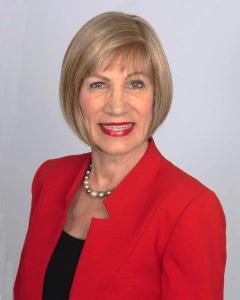
5. Wanda Gozdz

Dr. Debi Lynes interviews Wanda Gozdz of Golden Age Living about safe home environments at any staging in life on the Aging in Place Podcast

(duration: 32 minutes 44 seconds)

Wanda Gozdz

Subscribe

Apple Podcasts | CastBox | Google Podcasts | Pocket Casts | RadioPublic | Spotify | StitcherTuneIn

Follow

Facebook: https://www.facebook.com/aginginplacepodcastcom/

Instagram: https://www.instagram.com/aginginplacepodcastcom/

Twitterhttps://twitter.com/aging_podcast

Resources

Disclosure: Links below to other sites may be affiliate links that generate us a small commission at no extra cost to you.

Amazon Echo Dot

Certified Aging-in-Place Specialist (CAPS)

Certified for Humans smart plug

Golden Age Living

Ring

Solid Rubber Threshold Ramp

Vacuum elevators

101 Mobility

Sponsors

Lynes on Design

Takeaways

When it comes to aging in place at any stage in life, it’s about safety, security, ease of use, comfort, and beauty.

Transcript

Debi Lynes:                   00:03                Hi and welcome to Aging in Place for every stage in life. What if you could visit or have a home that would accommodate anyone, at any age, any physical ability at any time? How cool would that be? That’s what we’re doing here at aging in place. Why me? Because I’m a doctor of psychology and I specialize in physical spaces and health and wellness. Also, I love designing with intent at any age. Why now? Because we the baby boomers want to age in place gracefully and we want our families around us as much as we can and why you the audience? Because we want you to experience what it’s like to have a home that’s safe, aesthetically pleasing and that you can live in at any age, with any ability, at any time. I’d like to introduce you now to Aging in Place Podcast for every stage in life.

Debi Lynes:                   01:05                Hi and welcome to Aging in Place Podcast. We are so excited to have as our guest today, Wanda Gozdz. Thank you so much for joining us. I’m really excited to talk to you, Wanda. Today you had been a teacher and a mentor to me. And what I’d like to do is ask you a little bit about CAPS certification and what a CAPS designer, architect, occupational therapist, physical therapist does?

Wanda Gozdz:              01:34                Well, a person that’s a certified aging in place specialist really helps people with home modifications. They basically do an assessment to determine is the home adaptable to a person’s need as they change over time and then they provide design solutions and they also implement those design solutions to create an environment that provides ease of use, comfort, safety and beauty.

Debi Lynes:                   02:03                Things that you and I talked about and that you taught me early on was that when we talk about aging in place is really creating a home for anyone at any age, in any stage of life. And that it doesn’t serve any of us well if we limit what we talk about in certified aging in place, if we just put the seniors as a group. It’s really about anyone. Can you talk a little bit about what CAPS is? You sort of gave us a broad spectrum. Specifically from the course, what are we going to learn?

Wanda Gozdz:              02:39                Well, we’re going to learn specifically that there are three segments of the market. There’s those people that are just aging and they’re perfectly healthy. I’m 70 years old. I’m aging. I have no immediate needs, but my environment is such that should something happen to me in the future, I can adapt, my environment adapts to my need. An example would be, for example, I have arthritis and I have arthritis in my right hand. I broke my hand. So now it’s a little harder for me to open my door knob. So what I did do is I adapted my environment by changing it to a lever handle, which allows me to use my forearm instead of my hand and it provides me still ease of use and I still can get into my home comfortably. So that is what I’m coming to the table to be able to assess that that’s what you need in your home.

Wanda Gozdz:              03:35                So therefore, regardless of who comes to your home, whether it’s your grandma or your children or your grandchildren, they can easily get into your home regardless of their condition, their age, or their ability.

Debi Lynes:                   03:50                You know, when I remember sitting in a class and being very familiar with ADA and universal design, but not realizing how all encompassing it is for living any place at any time. Can you talk to me a little bit about universal design?

Wanda Gozdz:              04:07                So universal design is basically the fundamental principles that allow comfort, safety, ease of use, and accessibility regardless of what the person’s ability to do that. An example of that would be, I want something that is assessable to everyone. If I have a 36 inch door, it is assessable, meaning everyone can walk through that door. If I’m walking with a walker, I can get through the door. If I have a scooter, I can get through the door. If I have a stroller, I can get through the door. So it’s equitable and it provides access to everyone. So if I put the door in there, the door is equitable, it’s universal and it’s accessible. Regardless of my ability, my age or what I’m doing, it allows me through the doorway. So that’s a principle. Another principle would be, for example, ease of use or perceptible information. So something that does the task for you. If I have a touch faucet, then that does the task for me. It’s automatically is intuitive and it does the task for me. So whether I do the task or the task is done for me, it allows me to have my way regardless of what my ability is, it allows me to still perform the task of washing my hands.

Wanda Gozdz:              05:27                Perfect example is we all know that we go, Commercially, we go to the bathroom in a public bathroom. When you go to the bathroom, you sit on the toilet, it automatically flushes, you stand up, you go to the faucet, you stick your hands underneath it, the faucet automatically comes on and washes your hands. Then I go to the dryer and it blow dries my hands and it dries it. So that allows me the ability, regardless of who is using it, it’s universal because everyone can use it. But if I have a disability, I still can use that product. Meaning I still can get my hands washed because something is helping me in order to do that. And those kinds of products that are intuitive are going to be the things that are going to allow people to remain in their home.

Wanda Gozdz:              06:16                An example would be the lights automatically come on in my house. That’s a safety and security issue. That’s a universal design feature because that’s intuitive. The lights automatically come on. So regardless if I have macular degeneration or I can’t see or I can’t hear, the task is being basically performed for me. So if we use those principles in designing or creating our environment, that way it doesn’t matter who comes to see me. It doesn’t matter how old they are, it doesn’t matter what their limitations are. They still can be able to be functional and get the job done, which means our activities of daily living, which are going to the bathroom and eating ourselves, those are the activities of daily living. So we want that to be safe, secure, functional, and assessable.

Debi Lynes:                   07:11                Do you think, since you’ve started the CAPS course and just known more and more about universal design and accessibility, things have changed? Is the whole industry broadening? And since now there are many of us who are aging, we want to age in place, we and we all have grandchildren. We want our grandkids to be able to come and visit. Have things changed over time?

Wanda Gozdz:              07:37                No. Well, what happens is now we’re designing. The clear distinction is our bodies are changing over time. Are we, is our environment changing? So we have to adapt to our environment so that as we change over time, we can still be able to function in it. So what’s happening? So right now the reason we’re modifying homes is because our bodies are changing. And so we want the environment to be able to do that. So if I’m doing a modification, I’m going to look at those things that allow me to do that. I need to get into the bathroom. So I need a wide enough doorway. The trend right now is for a wet room. We want as much space in the bathroom as possible for accessibility regardless of whether or walking in there, whether we’re on wheelchair, whether we’re in a walker or we’re bringing the dog in for a bath or we’re bringing our grandchild in. We want as much space as possible. So we’re creating a bathroom that has no walls in it. It just has the basic structure and the whole room is assessable to me. So I have a shower head that moves up and down. I have a faucet that I can easily touch and be able to stick my hands under. I have grab bars that give me stability and security while I’m navigating in that shower. So all of that is changing. What is changing and the products, they’re becoming a lot more friendly and a lot more aesthetically pleasing. So what is changing is the products are there and they have been there. We’re moving them from institutional life to what? To aesthetically pleasing because it’s now our home and we want our environment to be beautiful.

Debi Lynes:                   09:25                One of the things that you pride yourself on. And one of the things that I think you’re internationally known for is being able to walk into a home and really help people assess ways that they can make their home more visitable, if that’s the right word for that. When you walk through a home, can you give us just an example of you walk in or you drive into the driveway? What kinds of things are you looking for?

Wanda Gozdz:              09:51                We start at the curb. I’m looking for access. I need to be able to get into my home. So it starts at the curb. Egress starts at the curb. I’m looking at what obstacles. How am I getting in? Am I traveling? Am I getting in here through the garage? Am I getting in there from the front stairs. And what are the travel paths? So my travel path is important. Do I have to step up, you know, from the garage into the house. So that is an obstacle. So what do I have to do there? If I am in the house and now I have to walk up a flight of stairs, that is an obstacle because now I have something in my travel path that’s stopping me, so I’m looking at that travel path. Do I have a 42 inch width that allows me a travel pack that allows me? Now since we have an open space plan and most people’s homes are open, we use furniture for that travel path. So do I have enough space between the couch and the counter so that I could pass forward safely?

Wanda Gozdz:              10:52                So that’s what I’m looking for. I’m looking how am I walking through that environment easily with a minimal amount of effort.

Debi Lynes:                   11:02                All right. I tell you what, you’re amazing and this is why she’s so fascinating to listen to. She’s such a wealth of information. Wanda, we’re going to take a quick break. We’re going to come right back. I just talk a little about more about aging in place. Stay with us.

Debi Lynes:                   11:14                Hi, I’m Dr. Debi Lynes. Design elements are psychologically and physically supportive and conducive to health and wellness. To learn more about what lines on design can do for you for more information, certified aging in place and facilitative and supportive design. Look for us at lynesondesign.com. That’s L Y N E S on design.com

Henrik de Gyor:             11:39                Hi, I’m Henrik, the producer of Aging in Place Podcast. If you’d like more information and transcripts of this podcast, visit aginginplacepodcast.com and now back to Debi Lynes with the next segment of Aging in Place Podcast for every stage in life.

Debi Lynes:                   11:59                We are back here on aging in place. We are again here with Wanda Gozdz. Good to see you again. It’s amazing to talk with you. You are such a fountain of knowledge and you make it really user-friendly, which is great for many of us. You know, I’ve got a 91-year-old dad and a two-year-old granddaughter and I think when they can visit the house and everybody’s safe, I feel much more comfortable. You were taking us a walk through a home and really showing us some things that we can pay attention to. The takeaway or what I really heard from you was from the beginning. Okay. When you drive up to a house, that’s where you really start paying attention to aging in place and making your home universally designed.

Wanda Gozdz:              12:45                So what I’m going to say is the other issue is our population is going to be basically the female because we outlive men by 10 years. And so what women want is security and so that starts at the outside of the house to approach you. Somebody comes to my front door. I live in Florida. Code basically requires that our doors open out to deal with the hurricane. So when the door out and someone knocks on my door, I have to step outside and then look behind the door to see who’s there. Well, that’s a security issue and a safety issue. If I live by myself, I want to be able to be safe. I want to know who’s on that other side of the door before I answer the door, not after I opened the door.

Debi Lynes:                   13:33                I never thought about that.

Wanda Gozdz:              13:33                Yeah. And that’s a big issue. One, and I do it every day because somebody knocks on my door, I have to step out the door and I have to look behind the door. So to me that’s a safety issue. So what I want to do is what is going to enhance security and safety. For me, a perfectly example Ring phone. Ring phone is the ability to be able to have communication directly through. So I apply it on. If I have an iPhone or a [smart] phone, it’s an application and it’s a product you put outside. You do not have to have an electrical connection. You put it on the outside and it’s a camera. So it has 180-degree view in front of me around my environment. So it looks down my corridor and up my corridor. Ring, R-I-N-G, Ring. I mount it to the outside of my house and there’s a camera inside. And that camera when somebody approaches, it automatically is on and being able to see from a range back here. And the security issue is that you can add a light on top.

Wanda Gozdz:              14:37                So lighting is a security issue. If I have a light above my doorway and someone approaches me. Immediately, I can see who’s coming to my home. Now with Ring phone, somebody knocks on my door. I automatically see them on my phone and I don’t have to open the door because I’m looking in my phone to communicate. “Hi, how are you, Debi?” Oh, you can say, “Oh, I’m, hi Wanda. How are you?” “Oh, hi Debi. Thank you for coming over. Let me open the door for you.” If I don’t know who’s at the door. “I can say, may I help you?”

Debi Lynes:                   15:11                Got it.

Wanda Gozdz:              15:11                So I don’t have to open the door in order to see who’s at my door. So that’s a security and safety issue and for under 100 bucks, maybe it costs 100 bucks to get the combination of the phone and the light. Immediately. Safety and security is addressed. And I feel much more comfortable, whether it’s nighttime or daytime, when somebody is at my door. One feature is now if you’re dad… You’re away. I go to my son’s house, he says, “mom, let me know when you come to my house. I’ll open the door” or you can give this feature to someone else and then when, so your dad, if he lived in another house, he can give you access so whoever comes to the door you can see who’s coming to Dad’s door.

Debi Lynes:                   15:54                What’s interesting is I was thinking about my daughter who has a two-year-old and is pregnant with another one and I think, I mean we’re saying security, but it’s just convenience too. It would be a wonderful feature for her to be able to know again, if she needed to really come to the door or not.

Wanda Gozdz:              16:10                That’s right. And if she’s in another room feeding the baby, she can keep the phone there and she doesn’t have to get up to go see the door. Somebody’s right there. She’s has the access to it, so convenience, ease of use, comfort and safety are the features. Security and safety is what the Ring phone basically provides. And I recommend that to everyone, especially to women.

Debi Lynes:                   16:31                Well, it’s so much fun to talk about product because I think at the end of every one of our podcasts, what we try to do is we do takeaways, practical things that people can actually do when they finish and this is exactly what we’re looking for. I’m surprised when you consider or when you share lighting as an area of safety and security until you mentioned the light at the front door. Are there other things that are safety and security we really wouldn’t think about?

Wanda Gozdz:              16:57                The number one feature for safety is lighting. I say that what we have to do is change our lighting. Lighting provides safety and security. Right now, we grew up on Thomas Edison created the yellow light bulb. It is yellow light. As we age, our eyes turn yellow. So what we need is we need blue light. LED light is the light that we need that provides security and safety. If we increase lighting, automatically we increase security and safety. So where do you need that additional light?

Debi Lynes:                   17:30                Right, exactly.

Wanda Gozdz:              17:30                In transition areas and places, so we need direct light for thing. We need task light. So I’m working at the counter. I want that light there and then I need lighting that’s going to provide me the ability to be able to see what I’m doing in that particular task.

Debi Lynes:                   17:48                Let me ask you another question about lighting. Oftentimes turning on lamps, turning off lamps. I know for my dad, it’s oftentimes a hassle to move around and turn off all of these individual things. Are there products out there to make that easier also? Yes.

Wanda Gozdz:              18:07                You can have an app from your phone. You got Alexa, you talk to Alexa. Say “Alexa, turn on the lights.” “Alexa, shut off the lights.” “Alexa, tell me what time it is.” So you can use that as a feature or component that helps you with those features.

Debi Lynes:                   18:22                So from a certified aging in place point of view, tell me who would actually do that for you? Do you look for people who are certified in that?

Wanda Gozdz:              18:34                You’re gonna look for an interior designer. You’re going to look for a contractor that’s got CAPS certified and you can check National Home Builders Association to their website and to put in CAPS and then you can find the people in your local area that are certified. You need to understand what you really need to have in your home.

Debi Lynes:                   18:54                What about things like bars, Counters? How do I determine the height of counters? And how do I, again, be proactive when I’m either renovating my house or building a new house to prepare for aging in place?

Wanda Gozdz:              19:14                Well, you’re going to have to have a professional. Then, you would want an interior designer that understands what the differences and/or you want a contractor that’s CAPS certified because they understand how to be able to determine what kind of counter you need, what’s your reach, how far you can be reach, how far you can lift, so they’re trained in basically doing that.

Debi Lynes:                   19:34                You know, when cost is no object, I think, “Oh, I’d like to put an elevator in” or I’d like to do things like that. Are there cost-effective ways to begin to retrofit, if you will, my home or when I’m building, are there ways to just develop a master plan and I can do it over time?

Wanda Gozdz:              19:54                Yeah. And that would be again, meeting with interior designer or CAPS certified professional because they are going to plan that space for you and how to best economize to get all of that. You know, for an elevator, you require certain things, for a lift you require certain things and they’re the experts that know all of the things. So I would probably say they need to do an assessment. So when they do an assessment, that’s where they evaluate what you can do in that space.

Debi Lynes:                   20:20                And so that’s what you were basically telling us when we went into the front and then we went in and furniture was something that we talked about travel. What about going into the kitchen? Talk a little bit about the kitchen.

Wanda Gozdz:              20:30                Well, the kitchen is the same way. Activity of daily living. What are you doing in the kitchen? You have to feed yourself, you have to wash the dishes, you have the cook and you have to clean up after yourself. So, you’re looking at the activity that the person is doing and how are they basically doing it and everybody’s different.

Debi Lynes:                   20:46                Well, from an accessibility point of view, what are some tips that you could give us about what we need to pay attention to within the kitchen area.

Wanda Gozdz:              20:56                Well when the kitchen, again access cooking, the stovetop, you need to make sure that the stovetop is safe and secure. So the big thing is induction stovetops are really good, worth for aging in place because it runs on magnetic energy so if something is removed, if you cooking in the pot and the water boils out, the stovetop automatically shuts itself off. Take the top pot off and you touch the stovetop. The stovetop is immediately cold. So for aging in place, that’s a perfect stovetop because I already have to lift my stovetop on twice while I was cooking and I’m thinking I could burn down the building.

Debi Lynes:                   21:36                I did the same thing. I popped popcorn and walked out of the room. Oops. Yes, very right. Not good.

Wanda Gozdz:              21:43                So you can basically do that. Yes.

Debi Lynes:                   21:46                What about if I do have my dad or someone in a wheelchair if a cousin just recently broke her leg and we were trying to figure out how to get her in and sit at, you know, come into the kitchen and sit at the counter…

Wanda Gozdz:              22:00                You’d want a high-level counter. So what she needs is access. So if you had a multilevel counter of two different heights, she can easily come with her chair and sit at the counter. So the design, right now, everybody wants an Island. Everybody wants an Island. That’s the trend. Well, an island you want to put multilevel in it because regardless of whether your granddaughter’s going to come and stand at it or somebody’s going to come in a chair and sit at it in a wheelchair, they’re going to have access to what? To be able to eat at the counter. So that multilevel counter gives you the ability to do that.

Debi Lynes:                   22:38                It makes so much sense. What is the difference between a lift and an elevator and if I’m not ready for an elevator or it’s cost-prohibitive right now, is there anything in preplanning that I can do to be able to put an elevator in it at some point?

Wanda Gozdz:              22:52                Well, the issue is that we have a lot of types of elevators. Elevator is known as a pneumatic elevator. It’s a vacuum elevator. So you know like you go to the bank and you put your money in, it goes up the tube that’s called vacuum, that’s called the pneumatic vacuum. So that doesn’t require anything other than plug and play. But you have to have someplace to put it. That would be great in front of a stairwell. If you had a winding stairwell or a loft elevator because it could go from a level to the other. The issue is it only requires electrical outlet. It requires a battery backup and cost you $16,000 $17,000, that’s the fastest one that you can get overnight to your house. If you had an issue. It has some requirements. Some of them are not wheelchair accessible. They’re creating them so they’re wheelchair accessible, but you can get one to another. The elevator is a little bit more complicated because that requires planning and that requires where is the space that you have in order to basically do that.

Debi Lynes:                   24:01                So let’s say I’m building a new house and I want to plan for an elevator because I’m going to have little kids and I’m also going to have aging parents. Is there anything I can do to plan for it?

Wanda Gozdz:              24:12                If you’re planning in a new house, you would want to put double stack closets next to the stairwell. Those double-stacked closets are for future shafts that you’re going to put the elevator in. Then you have to really know what kind of elevator you’re going to put in. Do you need an elevator pit? You need to have your electrical. You have to have your battery backup. You have to have your telephone. You have to have your walls reinforced. So there’s certain things that the designer or the builder can help you in that planning. When you can decide what kind of money you want to spend on that elevator and how much is it going to cost you.

Debi Lynes:                   24:44                What’s a lift?

Wanda Gozdz:              24:48                A lift is basically the same thing, but it’s used for short distances. It’s shorter. It only takes one person at a time, and it has a limitation of 500 pounds. So it requires a flat surface. So you’ll see lifts basically in older buildings where they had garages and they had transitions. It was only used for one person, but it will fit. It’s used instead of a ramp, a lift can be used in a garage because you can put it where the stoop is and then the person can transfer, but it has limitations. It only holds up the 500 pounds including the equipment and the person. It requires that you have somebody who’s holding a button to move from place to place. But so it’s a mini-elevator, mini-elevator that’s short, but it serves a purpose and it replaces a ramp very, very economically.

Debi Lynes:                   25:40                Talk to me a few. I was just going to say talk to me a little bit about ramps if you will. Can anyone build a ramp anywhere at any time? Are there specs or are there things we really have to pay attention to? You talk to me about that.

Wanda Gozdz:              25:55                Well, a ramp has got an issue because the ramp has to comply with local code… Building code. A ramp has to be able to be assessable. It has to be at least 36 inches high. You have to have a travel path and you have to have a surface and you have to show transition, so a lot of people make mistakes on ramps. I would say that you would want to talk to a professional to make sure that you’re compliant when doing a ramp. You can also buy a portable ramp. 101 Mobility is a big manufacturer. They sell portable products. You could buy a portable ramp to use it for a short term basis. That would probably be sometimes more economical than building a ramp. And ramps can also be built. Like I see a ramp down my street that’s on the side of a garage and it goes from the street to the garage so ramp can be very simple. If it’s at the ratio of one to 20, it means it’s pretty flat and pretty slowly sloped, so you don’t have to have rails on the side of it. So those are accessible. So that ramp doesn’t require that it has railing on because it’s sloped gradually. So you’re not going to fall off of anything.

Debi Lynes:                   27:08                Wow. There’s just so much know our ramps pretty much standard in most commercial buildings now. Are they required?

Wanda Gozdz:              27:15                Yes. Under American Disabilities Act, any commercial building requires to have a ramp.

Debi Lynes:                   27:21                You know, we’re talking about wheelchairs and we’re talking about children and we’re talking about those kinds of disabilities. I’m just now thinking…blind, lack of vision, hearing, some of those senses are there. Is there anything specifically or interesting about aging in place when your site goes? Oh yeah. Well I see that with myself as I get older.

Wanda Gozdz:              27:49                Then we use other tacticals. So if we can’t see, we need to hear. If we can’t hear, we need to see. So we have to use all the other senses. So we bring all the other senses to the table when we’re designing.

Debi Lynes:                   28:03                Give me examples of that, of what that would look like.

Wanda Gozdz:              28:07                So if I can’t hear, I need to see. So I would need color contrast, which would help me with what? With the showing where the differential. At the end of the hallway it’s going to say, Oh, something’s happening. If I can’t see, I need audio, so something to tell me. So that could be a command or it could be a tone or it could be a voice coming from an Intercom is the thing that people use. If they can’t hear, they can see. So you can have a camera that’s there and they can visually see who’s on the other side of the door or who’s going through the door. So that would be a way to accommodate them.

Debi Lynes:                   28:48                What about color? Do you find that as we get older we need softer color? brighter color?

Wanda Gozdz:              28:54                Color is the biggest thing that we need. Color contrast. As we lose, we lose the ability for depth perception and we need color contrast. So the darker colors are harder for the eye to see. Lighter colors are better, but we need contrast between a surface on the floor or the surface and product. So surface that we need immediately.

Debi Lynes:                   29:15                We’ve only got about a minute or so. And you, you pretty much have a mantra about what certified aging in place certification really looks like.

Wanda Gozdz:              29:26                It’s safety, security, ease of use and comfort.

Debi Lynes:                   29:32                Safety, security, ease of use and comfort.

Wanda Gozdz:              29:37                And then I add beauty because everyone wants their environment that’s beautiful. That’s the design.

Debi Lynes:                   29:42                Safety, security, ease of use and comfort. That makes so much sense. Again, I keep saying it but I can’t say it enough. You’re a wealth of knowledge and I think what we did today on this podcast is really just scratch the surface of what and how I certified aging in place specialist can really enhance your living space and again it’s all about health and wellness. So I am very, very grateful to you and I want to thank all of our listeners too and Wanda, we will definitely have you back here on aging in place.

Wanda Gozdz:              30:22                And if anybody’s interested in classes they can just go to my website, goldenageliving.com and go under course schedule and they can find out where the courses are listed and available.

Debi Lynes:                   30:35                You are amazing. Again, thank you so much for joining us.

Debi Lynes:                   30:38                I’d like to introduce you to a friend of mine, Tracy. Tracy is naturally curious and always creative and when we were doing the Aging in Place Podcast, she said there are so many quick tips that I can think of offhand my response. Who knew she’s going to be with us every week, giving us a quick tip and to hint that is a practical application.

Tracy Snelling:              31:07                Thanks Debi. Time for 60 second make-over. Thanks to online shopping, you now can do a little makeover for your home with just a couple of clicks. Have that doorway that has a little step up to cross with someone using a walker. Those door jams can be a fall waiting to happen. What to do? A popular online shopping website sells rubber thresholds in many sizes. A rubber threshold will prevent walkers or wheelchairs for hitting that bump in the road. Prices usually start around $30 it’s an easy fix for a big problem. Who knew?

Debi Lynes:                   31:42                Wow, Wanda Gozdz, a certified aging in place specialist. She gave us so many takeaways. The entire podcast is a takeaway to tell you the truth because there’s so many practical tips, but here’s the bottom line and the takeaway I hope you all get, and that is when it comes to aging in place at any stage in life, it’s about safety. It’s about security, it’s about ease and it’s about comfort. Thank you all for joining us here on aging in place.

Henrik de Gyor:             32:16                Aging in Place Podcast is hosted by Debi Lynes and produced by Henrik de Gyor. If you have any comments or questions, send an email to debi@aginginplacepodcast.com. We would love to hear from you. If you’re interested in advertising or sponsoring this podcast, email us at pr@aginginplacepodcast.com. Thank you for listening to Aging in Place Podcast.